Most people think branding is the logo, the color palette, the fonts. When a client comes to us and says they need branding, they usually mean they need a visual identity. And they're not wrong to conflate the two — that's how the industry has taught them to think.
But branding is not what your company looks like. It's what your company means .
It's the associations, feelings, and expectations people carry about you before they ever see a logo. In 2014, Burberry didn't change their logo or color scheme — but they rebranded. They stopped being a choice for middle-aged executives and became the label of young luxury streetwear buyers. The visual stayed the same. The meaning shifted completely. That shift was branding.
At Growdient, when clients come in asking to "just make a logo," the first conversation is always about what they're actually trying to change — because a new logo applied to unclear positioning doesn't solve anything. This article defines branding as both a noun and a verb, distinguishes it from marketing and visual identity, and maps the components of a real brand system.
Branding Definition — The Noun and the Verb
The definition of branding — what the word actually means — is more precise than most people expect. Branding is two things operating simultaneously, and conflating them is the source of most confusion.
The noun — a brand is the set of associations, perceptions, and expectations people hold about a company, product, or person. It exists in the audience's mind, not in the company's logo file. You don't own your brand. You influence it. Your customers hold it.
The verb — branding is the deliberate work of shaping those associations through strategy, behavior, messaging, and design. It's what you do to close the gap between how you want to be perceived and how you currently are.
Neither definition has "logo" in it. That's intentional.
The clearest way to see the distinction is through Patagonia. The brand means environmental activism, durability, and a principled rejection of hyperconsumerism. That's the noun — what people believe about Patagonia before they set foot in a store. The branding work that built those associations includes the Worn Wear program encouraging repair over replacement, the "Don't Buy This Jacket" campaign actively discouraging purchases, and their 2022 decision to restructure the company to funnel profits to a climate trust. None of those are marketing tactics. They are brand strategy made visible through behavior. The logo appeared on all of it — but the logo didn't create any of it.
How Branding Differs from Marketing
The relationship between branding and marketing is one of the most consistently misunderstood in business.
Branding answers: who are we, what do we stand for, and why does that matter to the people we're trying to reach?
Marketing answers: where do we show up, what do we say, and how do we get people to act?
Branding is strategy and identity. Marketing is activation and distribution. Marketing without branding is noise — tactics that create awareness for a company no one has a reason to care about. Branding without marketing is invisible — a beautifully defined identity that nobody ever encounters.
They're not interchangeable. They're sequential. Brand first, then market.
What Is Branding in Marketing — and How They Work Together
What is branding and marketing as a combined discipline? The branding meaning in marketing is different from marketing itself — branding sets the foundation, marketing activates it. Confusing their roles leads to one of two expensive mistakes: spending on marketing before branding is clear (amplifying a confused message), or investing in branding without activating it through marketing (building a beautiful identity nobody sees).
Apple is the most cited example for a reason — it's genuinely clean. Apple's branding is minimalism, premium quality, and a counterculture origin story. That's what people believe about Apple before they see a single ad. Apple's marketing is product launch events, billboards with single-product hero shots, the Apple Store as retail theater, and an online store with almost no copy. The marketing works because the branding is unambiguous. If the branding were confused — if Apple tried to compete on price while claiming premium, or launched a product line that contradicted the design philosophy — no marketing budget would fix it.
The sequence matters: establish the brand, then market it. Not the other way around.
The Real Components of a Brand System
A brand is not a single thing. It's a system — four interconnected layers that together determine how a company is perceived.
Layer 1: Brand Strategy
The foundation. This is where the real branding work happens before anyone opens a design tool. Brand strategy includes positioning (where you sit in the market relative to alternatives), purpose (why you exist beyond making money), audience definition (who specifically you're for and what they believe), and competitive differentiation (what makes you worth choosing). Without this layer, everything built on top of it is guesswork.
Layer 2: Brand Identity
The visible and verbal expression of the strategy. This is what most people mean when they say "branding." Brand identity includes the visual system (logo, typography, color, graphic elements, photography style), the verbal system (tone of voice, messaging framework, naming conventions), and the sensory system (sound, physical materials, environmental design). Visual identity is the most commonly discussed component — and the most commonly mistaken for the whole.
Layer 3: Brand Experience
How people actually interact with the brand across every touchpoint — the website, the product, the packaging, the customer service conversation, the onboarding flow, the invoice. Each of these is a brand moment. Individually they're small. Collectively they determine whether the brand strategy lands in reality.
Layer 4: Brand Behavior
What the company actually does — the decisions it makes, what it prioritizes, what it refuses. This is the layer that either validates or undermines everything above. A brand that claims to value sustainability but uses single-use plastics in every shipment has a brand behavior problem no amount of marketing can paper over.
Glossier's brand system illustrates all four layers working together. The strategy was clear: beauty products for women who wear minimal makeup and want skin to look like skin. The identity delivered millennial pink, minimal packaging, and a direct-to-consumer visual language. The experience was Instagram-first, with products discovered through editorial content rather than retailer shelves. The behavior was product development based directly on customer comments in blog posts. The logo is almost beside the point. The system is why it worked.
What Is Branding in Graphic Design — Visual Identity as One Layer
When designers talk about branding work, they usually mean visual identity: the logo, the typography system, the color palette, the graphic elements, the guidelines document that governs how everything is applied. This is real, important work — and it's a specific subset of branding, not the whole thing.
The confusion between "branding" and "visual identity design" is partly semantic and partly structural. Designers are hired to produce visual deliverables. Clients brief them on visual deliverables. The industry charges for visual deliverables. So "branding project" often functionally means "visual identity project" — even when the underlying strategic work either doesn't exist or hasn't been done.
The problem: visual identity without strategic foundation is decoration.
A logo designed without a clear answer to "what does this company stand for and who is it for?" will be aesthetically competent and strategically inert. It won't communicate anything specific, because nothing specific was defined for it to communicate.
Airbnb's 2014 rebrand is the clearest case study for how this should work. The Belo symbol and custom Airbnb Cereal typeface are genuinely beautiful pieces of design. But they weren't designed first. The design team at DesignStudio spent months defining the strategic pillars — belonging, community, trust, adventure — before a single sketch was made. The mark is a stylized combination of a person, a location pin, a heart, and the letter A. Every element is deliberate. The design gave the strategy a face. The strategy gave the design meaning. Remove either one and you have a weaker outcome.
Branding Beyond the Visual — Photography, Environments, and Sensory Systems
A brand shows up in more places than a logo. The visual identity is the most portable expression, but branding extends into every sensory and experiential layer a customer encounters.
Photography as a Branding Decision
Photography style is one of the most underestimated brand tools. The choice between lifestyle imagery and product-only photography, between high-contrast editorial shooting and warm natural-light documentary, between showing people or showing things — these are branding decisions. They communicate personality, audience, and aspiration as directly as any logo.
Compare the photography of two sportswear brands: Nike and Lululemon. Nike shoots athletic performance in motion — sweat, effort, competition, extremity. Lululemon shoots wellness and community — yoga in natural light, people laughing in studios, the calm after the workout. Both brands make sportswear. Both use photography as a primary brand tool. The photography signals who each brand is for and what they value. The logos are almost irrelevant by the time the photography does its work.
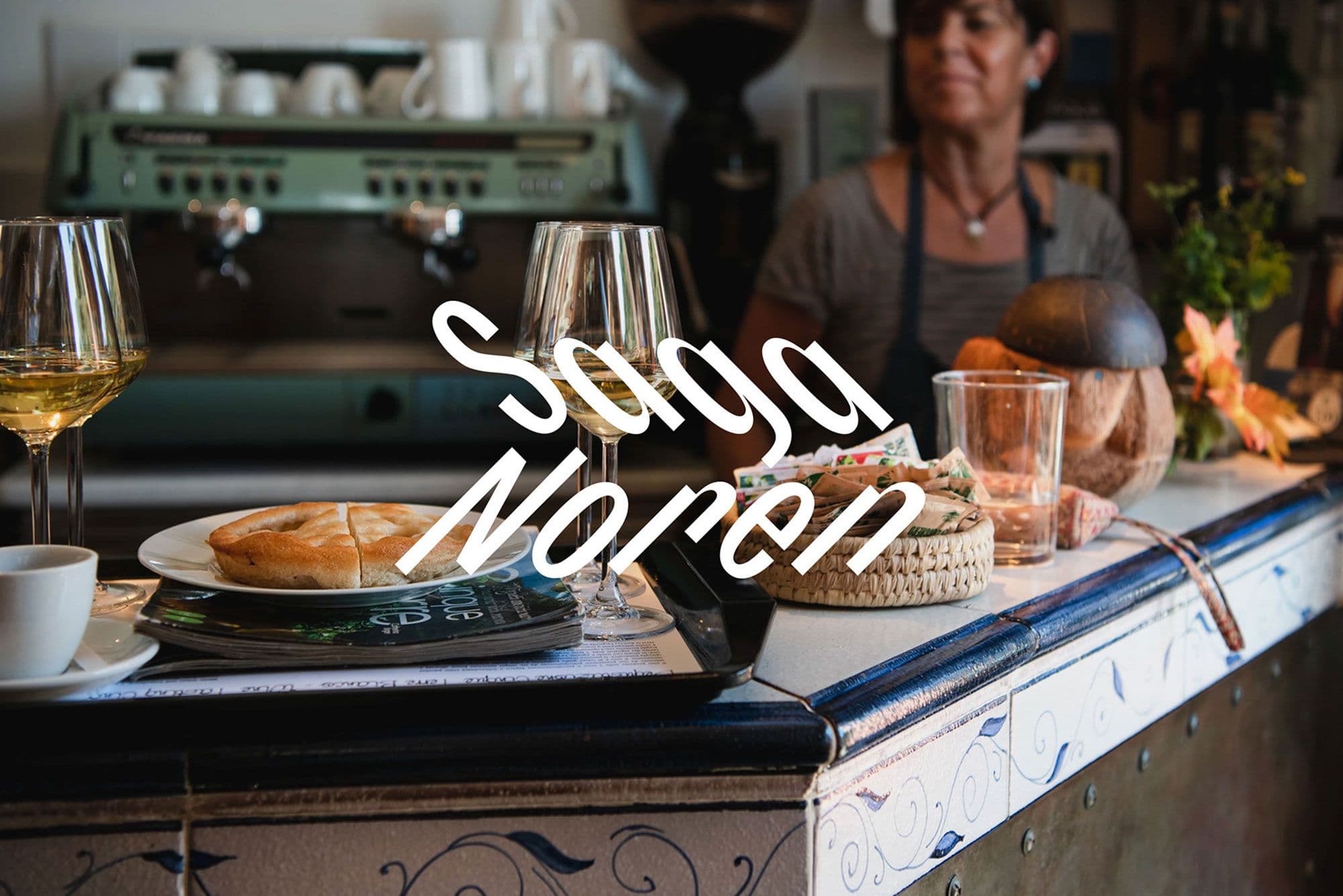
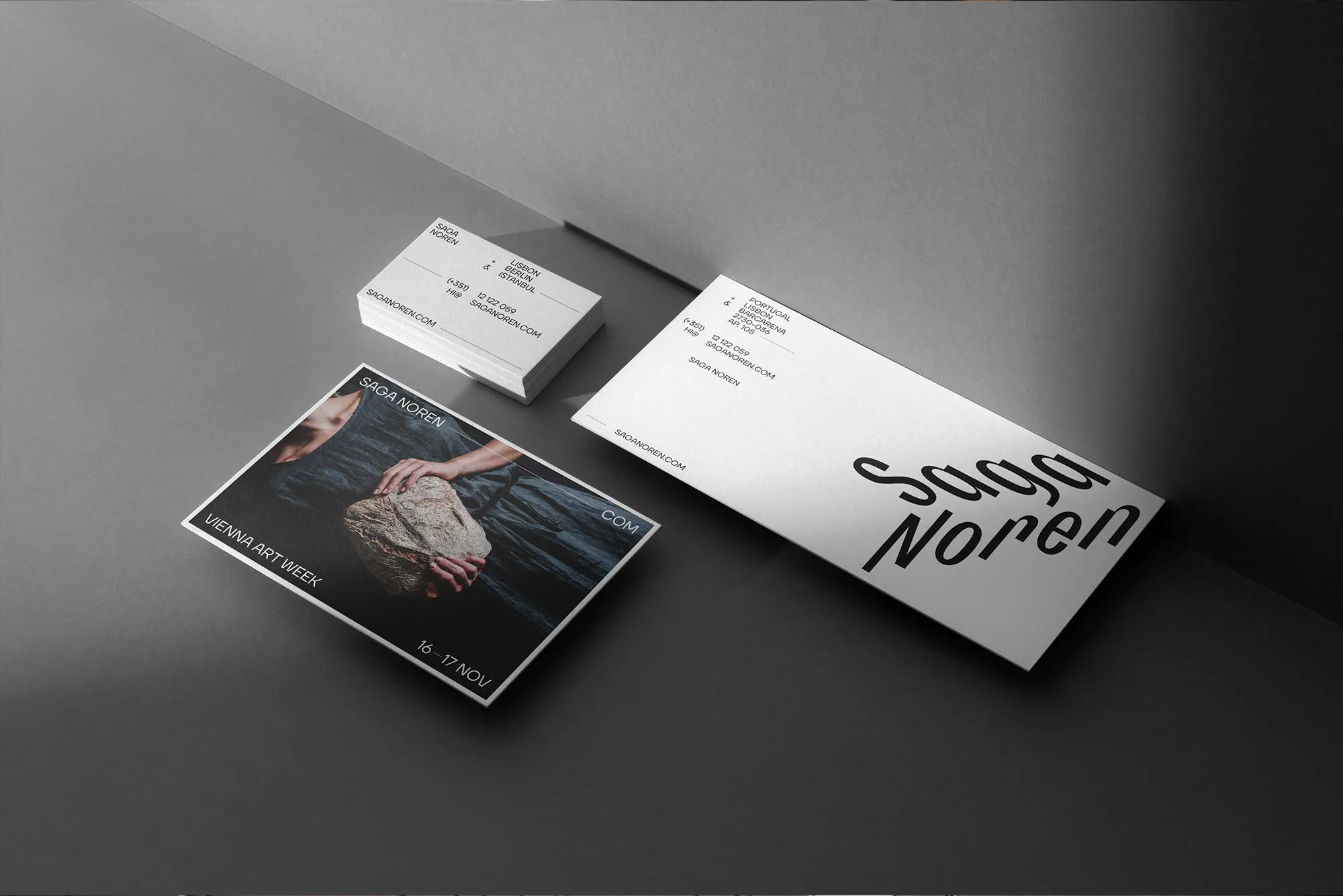
For Saga Noren — the food and lifestyle photographer we worked with at Growdient — the brand identity challenge was specific: how do you build a visual identity for a photographer without it competing with the photography? The answer was restraint. Clean logotype, light palette, minimal graphic system. The brand's job was to step back. The photography carried the story. That's a branding decision — one that required understanding what the brand should not do as clearly as what it should.
Physical Environments
Retail spaces, offices, and event installations are brand touchpoints as much as any digital asset. The Apple Store layout — white surfaces, open tables, no cash registers visible, Genius Bar positioned like a bar rather than a service desk — communicates the brand's values spatially. You understand something about what Apple believes before you've touched a product.
Glossier's New York flagship was designed to feel like a friend's apartment, not a cosmetics counter. The experience communicated the brand's anti-beauty-industry positioning more directly than any tagline could.
Sonic Branding
Sound is an underused but powerful brand layer. The Intel chime, the Netflix ta-dum, the McDonald's "ba da ba ba baaa" — these audio marks achieve the same recognition work as a visual logo, sometimes faster. Mastercard went logo-free in 2019 — removing their name from the overlapping circles mark — and simultaneously invested in a sonic identity to ensure recognition across digital and physical contexts where a visual wasn't visible.
Co-Branding — When Brand Systems Interact
Co-branding meaning, in plain terms: the deliberate combination of two distinct brands to create an association that benefits both. It only works when both brands have clearly defined identities, because co-branding is really the superposition of two sets of associations. Nike and Apple producing the Nike+ product line worked because both brands stood for performance and design clarity. The combination reinforced both. Co-branding with a brand whose associations are unclear or contradictory dilutes both parties.
How Growdient Approaches Branding
At Growdient, branding is what we do — but when clients come to us asking to "just make a logo," the first conversation is always strategic. Not because we're trying to sell a bigger project, but because a logo applied to an undefined positioning problem is a waste of budget. The visual work is only as strong as the strategic foundation under it.
In practice, this means every brand identity project starts with a strategy phase: defining who the client is for, what they stand for, and what visual and verbal language is specific to that position. Only then do we open a design tool.
We've seen what happens when the order is reversed. A client arrives with a logo they paid for and a brand that still doesn't register — because the visual identity was designed before anyone asked what it was supposed to communicate. Fixing it costs more than doing it right the first time. Often significantly more.
The work varies in scope. For Mr.Pops , a focused brand identity delivered a clean mark system and guidelines for immediate application. For Saga Noren , the brief required a light touch — restraint as a strategic decision, letting the photography lead. Different briefs, same principle: visual decisions follow strategic ones.
If you're unsure whether you need branding work, identity work, or both — that's exactly the conversation to have before spending anything →
FAQ: What Is Branding
What’s the difference between a brand and a logo?
A logo is a visual mark — one component of a brand identity system. A brand is the set of associations, perceptions, and expectations people hold about a company. The logo can express the brand, but it doesn’t create it. A company can have a well-designed logo and a weak brand, or a simple logo and an exceptionally strong brand. Apple’s logo hasn’t changed significantly in decades. The brand has evolved continuously.
What’s the difference between branding and marketing?
Branding defines who you are and why it matters. Marketing activates and distributes that identity to drive awareness and action. Branding is foundational and long-term. Marketing is tactical and campaign-driven. Marketing without a clear brand amplifies noise. Branding without marketing remains invisible. You need both — in that order.
Can a company rebrand without changing its visual identity?
Yes. Rebranding means shifting the associations and meaning people hold about a company. That can happen through strategic repositioning, behavioral changes, product decisions, or pricing shifts — without touching a logo. Burberry’s 2014 repositioning from executive accessory to luxury streetwear brand happened largely without visual changes. The brand shifted. The logo followed later.
What is branding in graphic design?
In design practice, “branding” usually refers to visual identity work: the logo, typography system, color palette, graphic elements, and the guidelines that govern their application. This is a specific and important subset of branding — but it’s not the whole thing. Visual identity work is most effective when it’s built on strategic foundation. A logo designed without clarity on positioning and audience will be visually competent and strategically inert.
What is branding photography?
Brand photography is the deliberate use of a consistent photographic style as a brand expression tool. This includes decisions about subject matter (people vs. products), lighting approach (editorial vs. natural), color treatment, composition style, and the emotional register the images should carry. Photography communicates brand personality, audience, and aspiration independently of any logo — often more powerfully, because it operates through emotion rather than recognition.
What is co-branding?
Co-branding is the deliberate combination of two distinct brand identities in a product, campaign, or partnership designed to transfer positive associations from each brand to the collaboration. It works when both brands have clear, compatible positioning. It fails when one or both brands are poorly defined, or when the association creates cognitive dissonance — pairing a luxury brand with a value brand, for example, typically dilutes the luxury positioning rather than elevating the value one.
When does a company actually need to invest in branding?
When inconsistent perception is creating real friction — in sales, hiring, partnerships, or customer trust. Or when you’re entering a new market, launching a product that requires you to mean something different than you currently do, or growing to a point where individual employees and vendors are making brand decisions without shared guidance. The early question isn’t “do we need branding?” It’s “is our current brand working, and if not, what specifically is it costing us?”
The Bottom Line
Branding is not a logo. It’s not a color palette or a font choice or a guidelines PDF.
It’s the set of associations people hold about you — and the deliberate work of shaping those associations through strategy, identity, experience, and behavior. Visual identity is one layer of that system. An important one. But it follows from strategy; it doesn’t replace it.
The companies with the strongest brands didn’t get there by designing a better logo. They got there by being specific about who they are, consistent in how they show up, and willing to let their behavior validate their positioning over time.
Not sure where branding work actually needs to start for your company? Let’s figure that out together →
Related reading: