Most brand identity design proposals list the same deliverables: logo, color palette, typography, brand guidelines. But three agencies will quote you $8K, $25K, and $60K for what looks like identical scope. The difference is not in what you get — it's in whether those assets function as a system or a collection of files.
A logo file and a color code do not make a brand identity. A decision framework that tells your design team how to apply those assets across 200 touchpoints does. At Growdient, we've built brand identity systems for startups, architecture firms, dental clinics, and DTC brands pre-launch. The deliverables look similar on paper. The outcomes do not.
This guide walks through what is actually included in a professional brand identity design engagement, what drives cost at each tier, and how to evaluate whether a proposal will give you a system that scales or a folder of PDFs that sit unused.

What Brand Identity Design Actually Includes (Beyond the Logo)
A complete brand identity design service is built from five interconnected layers. Most proposals list them. Few explain why each exists.
Discovery and strategy layer. Before any visual work begins, a professional engagement defines the brand’s job to be done — who it's for, what it needs to communicate, and how it needs to behave differently from competitors. Without this layer, visual decisions are aesthetic guesses. With it, every color, typeface, and mark choice has a rationale you can defend.
Visual identity system. This is the logo architecture (primary mark, logomark, logotype, lockups, variants), the color system with usage rules and accessibility compliance, the typography hierarchy from display through body copy, and the graphic language — patterns, textures, illustration style, photography direction. Not a logo. A system.
Brand applications. The system gets tested against real contexts: website layout direction, pitch deck template, social media templates, stationery, email signature. These are not app designs — they're the first set of branded materials that prove the system works in practice. They're also what most teams actually use on day one. A brand identity package that skips applications hands clients a theory, not a tool.
Documentation and guidelines. Brand guidelines are the governance layer. Done poorly, they're a 12-page PDF nobody reads. Done well, they're a decision framework that answers “is this on-brand?” without requiring the original designer in the room. We deliver guidelines both as a working Figma file your team can update and as a PDF for easy sharing and reference.
Asset library. Final files in every format your team will actually use: SVG, PNG, PDF, dark/light variants, social-ready crops, editable source files. The difference between a professional handoff and a folder of JPEGs shows up six months later when someone needs a logo at 16px or for a dark background.
Airbnb’s 2014 rebrand illustrates what a real brand identity design system looks like. The Belo symbol wasn’t just a new logo — it was designed as a modular system that hosts could customize to create their own version. The color palette was built to work across digital and print. The 60-page guidelines documented how to apply everything. The system enabled thousands of hosts to create on-brand materials without a design team. That’s the difference between a brand identity package and a brand identity system.

The Three Tiers of Brand Identity Pricing — And What You Actually Get
Brand identity design pricing isn’t arbitrary. It reflects the depth of strategy, the breadth of applications, and the seniority of the team. Here’s what each tier actually delivers.
Tier 1 — $3K to $10K: The Minimum Viable Identity
What you get: a logo in multiple formats, one or two typefaces (usually from Google Fonts), a five-color palette, and a short PDF guideline — typically 10 to 20 pages. Limited strategic exploration, minimal brand applications, no system testing against real contexts.
Right for: early-stage startups before product-market fit, local businesses that need professional-looking assets, founders who need something to launch with and will invest properly when they have traction. This tier gets you a foundation. It does not get you a system.
Tier 2 — $15K to $40K: The Full Brand Identity Package
What you get: a discovery and positioning workshop, complete visual identity system, brand guidelines with usage rules and application examples, core brand applications designed (website direction, pitch deck, social templates, stationery). This is where most growth-stage companies and funded startups should be investing.
The difference from Tier 1: strategy is explicit, applications are designed not mocked up, and guidelines are built for teams to actually use. This is the tier where the work produces a system, not just assets.
Tier 3 — $50K to $150K+: The Enterprise Rebrand
What you get: multi-month engagements with stakeholder workshops, competitive audits, audience research, sub-brand architecture, extensive brand application design across every channel, and living brand portals instead of static PDFs. Enterprise and corporate rebrand territory.
Slack’s rebrand cost mid-six figures because it required redesigning the app UI, all marketing sites, enterprise sales materials, swag, and event presence simultaneously — while the product was live and in use by millions. That’s the scope that justifies this investment level. Most companies do not need it. But the companies that do, and buy Tier 1, pay for it later in inconsistency, rework, and fractured execution.

What Corporate Clients Actually Need (And What They Waste Money On)
Corporate brand identity design is a different discipline than startup identity work. The constraints are different. The failure modes are different. And the deliverables that matter are almost nothing like what most agencies propose.
Corporate clients face four specific challenges that startups don’t: legacy systems that can’t all be replaced at once, multiple stakeholder layers that each have approval authority, compliance requirements in certain industries, and distributed teams across regions or business units that need to apply the brand independently without bottlenecking through a central design function.
What they actually need is not a new logo. It’s governance infrastructure. A decision framework that answers brand questions at the point of creation, not after review. A system that a marketing manager in a regional office can apply correctly without calling headquarters.
The most common waste in corporate identity engagements: paying for trendy visual exploration that the legal and compliance teams will block anyway, buying a brand guideline document instead of a living system that teams can update, and redesigning every legacy asset at launch rather than building a migration path.
On a B2B SaaS engagement at Growdient, we inherited a brand with 40 slide decks in circulation — all slightly off-brand, all built by different teams in different tools. We didn’t redesign everything. We built a master template system in their existing tools with locked brand elements and flexible content zones. The rebrand stuck because it fit how they actually work. That’s corporate brand identity design done correctly.
The practical implication: when evaluating brand identity design agencies for corporate work, ask specifically how they handle legacy asset migration, how guidelines are formatted for distributed teams, and whether they have experience working with compliance or legal review. Most agencies don’t ask these questions in discovery. The ones that do are worth the premium.

How to Evaluate Brand Identity Proposals When Every Agency Lists the Same Deliverables
Two proposals can list identical deliverables and produce completely different outcomes. Here are five questions that surface the real difference.
1. Who owns strategy vs. execution, and are they the same person? In larger agencies, a senior strategist develops the brand platform and then hands off to a junior designer for execution. In boutique studios, the same person does both. Ask who specifically will be working on your project and what their role is.
2. How many revision rounds are included, and what counts as a revision vs. a new direction? Three rounds of revisions on a logo means three opportunities to refine the chosen direction. It does not mean three chances to explore different concepts. Make sure you understand the distinction before you sign.
3. What format are guidelines delivered in? A static PDF is easy to share but can’t be updated. A Figma file is a living tool your team can edit as the brand grows. At Growdient, we deliver both — a working Figma system and a print-ready PDF for reference.
4. Are brand applications included or are they placeholder mockups? A mockup shows a logo on a tote bag. A brand application shows the actual website layout direction, the actual slide deck template, the actual social asset grid. Ask to see examples of past application deliverables.
5. What happens after delivery if you need one more asset? The answer reveals whether the relationship ends at handoff or continues. Ask specifically about post-project support rates and whether they offer retainer arrangements for ongoing brand application work.
The test: ask every agency you’re evaluating to show you a sample guideline document and a final file package from a past project. The quality of those two artifacts will tell you more than any proposal document.
Brand Identity Design as a System, Not a Style Guide
The brand guidelines most agencies deliver are retrospective: here is what we designed, now follow these rules. At Growdient, we build identity systems as decision frameworks — the difference is significant and it's where most brand identity investments succeed or fail.
Every brand identity engagement starts with a strategy workshop where we define the brand's job to be done, then map every customer touchpoint where the brand shows up. From there, we design the core visual system: logo architecture, color with semantic meaning (not just pretty swatches), typography with hierarchy rules, and a photographic or illustrative language. Then we document not just what it looks like but how to make decisions when we're not in the room.
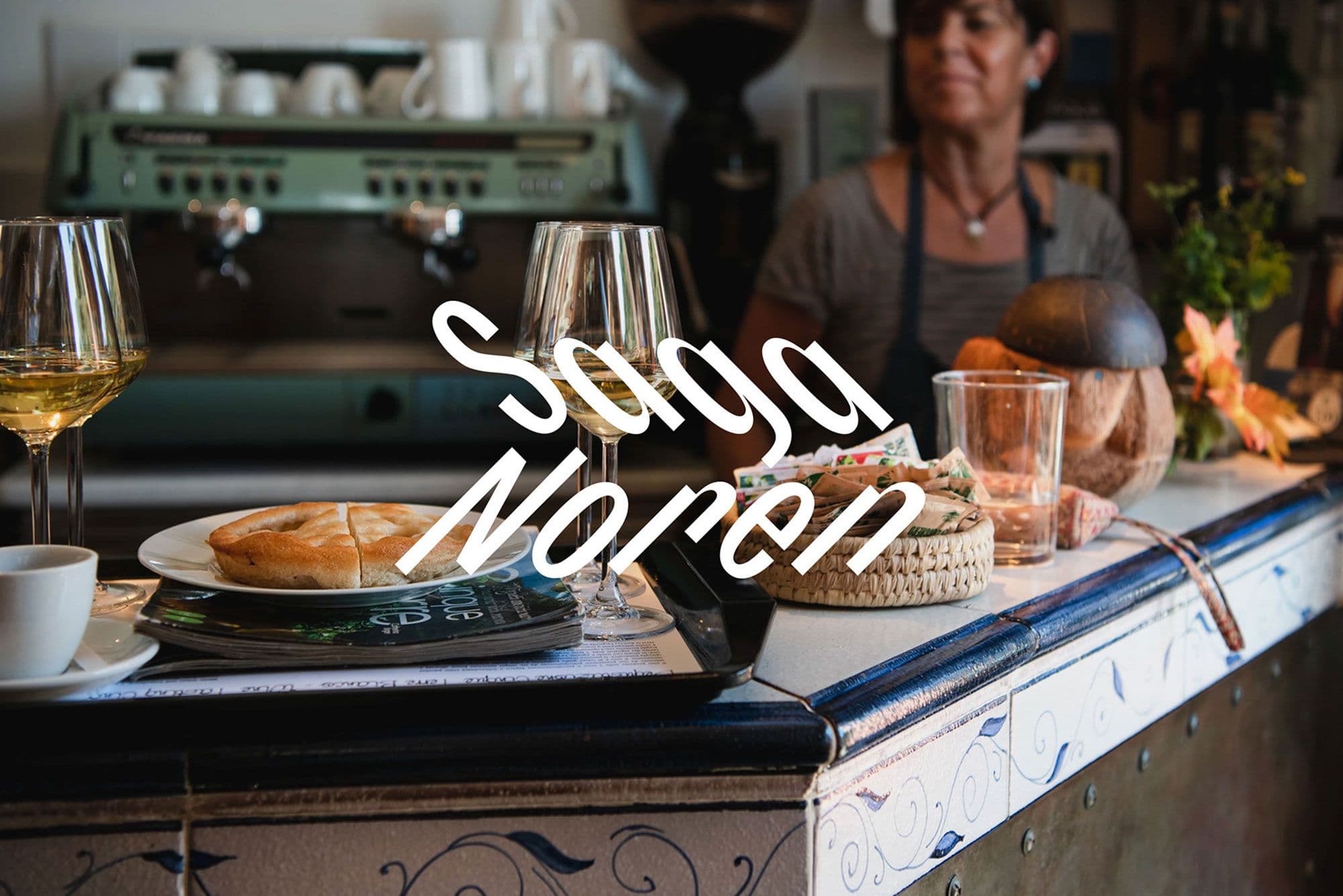
That documentation lives in Figma as a living system our clients can update — not a static PDF. We also design the first set of applications (pitch deck, website design direction, social templates, one-pager) so the system is proven before handoff, not theoretical. For Saga Noren , a food and lifestyle photographer, this meant building a deliberately restrained identity that stepped back to let the photography lead — a strategic decision, not just an aesthetic one. For Mr.Pops , it meant a focused mark system with clear application rules that a small team could apply consistently without a designer on staff.
The result in both cases: a brand identity system that works after handoff, not just during the engagement. If you're scoping a brand identity project and want to understand what tier makes sense for your stage, let's talk through it →

What Happens After the Brand Identity Is Delivered
A brand identity is not a launch event — it's the beginning of ongoing brand application. Most agencies treat delivery as the finish line. The clients who get the most value from brand identity investments treat it as the starting line.
The first 90 days after delivery determine whether the brand takes hold or fragments. This is when new hires encounter the brand for the first time, when marketing campaigns get designed under the new system, when vendors and partners receive assets. Everything that happens in this window either reinforces the system or creates the first exceptions that compound into inconsistency.
Three things that determine whether a brand identity sticks after delivery:
- Guidelines accessibility. Are they in a format your team can find and use, or archived on a shared drive nobody knows about?
- Internal training. Did anyone walk the team through how to use the system, or was it just emailed as a PDF?
- Template availability. Are there ready-to-use templates for the assets your team creates most often — presentations, social posts, email signatures — or does every application require starting from scratch?
The investment in a proper brand identity design service pays off when the system is used. Unused guidelines are just expensive documents. Build the infrastructure for adoption into the engagement scope from the beginning, not as an afterthought at handoff.
FAQ: Brand Identity Design
What is included in a brand identity design package?
A professional brand identity package includes the logo system (primary mark, variants, usage rules), typography hierarchy, color palette with usage specifications, graphic elements and photography direction, brand guidelines documentation, and asset files in all required formats. More comprehensive packages include application design — website direction, deck templates, social assets — and living Figma-based guidelines rather than static PDFs.
How much does brand identity design cost?
Brand identity design costs range from $3,000 to $150,000+ depending on scope, strategic depth, and agency tier. A minimum viable identity (logo, basic palette, short guidelines) costs $3K–$10K. A full brand identity package with strategy, applications, and comprehensive guidelines runs $15K–$40K. Enterprise rebrands with multi-month engagements, stakeholder workshops, and living brand portals run $50K–$150K+. The right tier depends on your stage, team size, and how many surfaces the brand needs to cover.
How long does a brand identity design project take?
A Tier 1 identity project takes 3–6 weeks. A full Tier 2 engagement takes 8–16 weeks depending on revision cycles and stakeholder approval speed. Enterprise Tier 3 projects run 3–6 months. The most common cause of delays isn't design — it's slow client feedback, unclear stakeholder approval chains, and direction changes mid-process. Establishing approval authority before kickoff cuts average timelines by 20–30%.
What's the difference between a brand identity design agency and a freelancer?
A brand identity design agency typically brings a team — strategist, art director, designer — and a structured process. A senior freelancer often does all three roles themselves, which can mean faster, more coherent work at lower cost. The difference shows up in capacity (agencies can handle more parallel workstreams) and in the depth of strategic thinking. For most growth-stage companies, a senior boutique studio or experienced freelancer delivers better outcomes than a larger agency at the same budget.
How do I brief a brand identity design project?
A good brief includes: your positioning (who you serve, what you offer, why you're different), your brand personality in 3–5 adjectives with reference brands, your target audience with enough specificity to inform visual decisions, a competitive visual audit of 5 closest competitors, examples of brands you admire and why, and a clear definition of which applications need to be covered. The more specific the brief, the less time and budget gets spent on strategic exploration during the engagement.
What files should I receive at the end of a brand identity project?
At minimum: SVG and EPS source files (scalable vector for all applications), PNG in multiple resolutions, PDF (for print), and dark/light/monochrome variants of the primary mark. You should also receive the brand guidelines as a working document (Figma, Notion, or InDesign source — not just PDF), editable templates for core applications, and a clearly named and organized asset folder. If you're only getting JPEGs and a PDF, the handoff is incomplete.
When should a startup invest in brand identity design?
The right time is when inconsistent brand presentation is creating real friction — in sales conversations, hiring, or partnerships. For most funded startups, this is between pre-seed and Series A. Pre-seed, a minimum viable identity is sufficient. By Series A, you need a system that scales with your team and channels. Waiting until later means paying to fix accumulated inconsistency rather than building correctly from the start.
The Bottom Line
Three agencies can quote identical line items and deliver completely different outcomes. The difference is in whether the work produces a system with decision logic behind it or a collection of assets that look good in a proposal but fragment in execution.
Scope to your actual complexity. Invest in the tier that matches your stage. And before you sign any proposal, ask to see a sample guideline document and a past project's final file package. That's where the real difference shows up.
Ready to scope your brand identity project? Talk to Growdient →
Related reading: